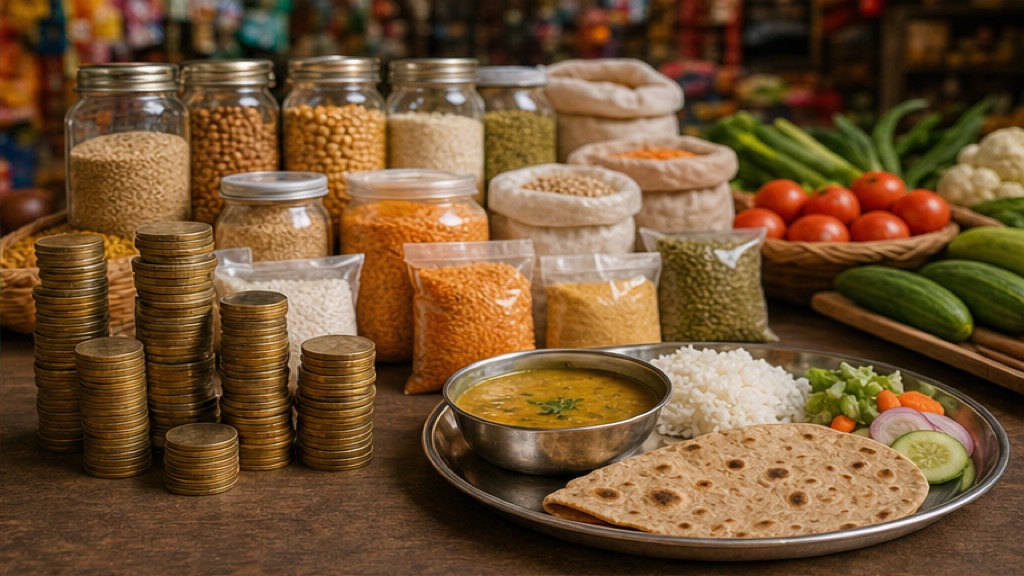
The weight-loss industry sells hope, the deficit is free
The global weight-loss market is worth hundreds of billions of dollars, yet the one thing that really works, a calorie deficit, costs nothing. Here is what the industry really sells, why it keeps growing, and how you can spend zero and still lose weight.
The weight-loss industry is huge. It sells powders, plans, patches, and apps. But the one thing that really works, eating fewer calories than you burn, costs nothing. This article is about the money side of the whole industry. It is not about any one medicine (for GLP-1 medicines, see our other article) and not about spotting scams (we have one for that too). The angle here is simple economics. The industry sells the packaging around weight loss. The active part inside, the calorie deficit, is free.
How big the industry is, and what it really sells
Big money. The global weight-loss market was worth about USD 319.3 billion in 2025. It may reach USD 596.5 billion by 2034. That comes from IMARC, a market-research firm. In India, the weight-management market was about USD 27.4 billion in 2025. Dietary supplements hold 58% of it. The United States commercial weight-loss market alone was worth $38.4 billion in 2024. So what does all this money buy you? The industry really sells three things: hope, structure, and products. Hope is the promise that this time it will work. Structure is a plan, a coach, or an app that reminds you. Products are powders, bars, pills, and creams. But the part that actually melts fat, a calorie deficit, is not in any of those. It is free. Burnie computes your daily deficit as food calories minus (BMR plus active calories). That math costs nothing.
What you pay for vs what is free
The weight-loss industry owns a secret weight-loss method you cannot get for free.
mostly falseMostly false, explained simply. The active part, a calorie deficit, is free and anyone can make one by eating a little less and moving a little more. What the industry sells is the wrapper around it: reminders, ready-made food, a coach, and a group. Some wrappers genuinely help people stick with it. A review found the best-studied program lost about 3.2% of body weight at 2 years, more than doing nothing. So the structure can help. But the loss comes from the deficit, not from paying. Burnie gives you a free wrapper: food logging, AI meal estimates, and a daily deficit number. The expensive secret was never a secret.
How to spend zero and still lose weight
The bottom line
The weight-loss industry is worth hundreds of billions because it sells hope and structure, not a secret. The part that works, a calorie deficit, is free. Burnie gives you the free wrapper: log your food, see your daily deficit, and eat a little less. Spend nothing. Lose weight anyway.