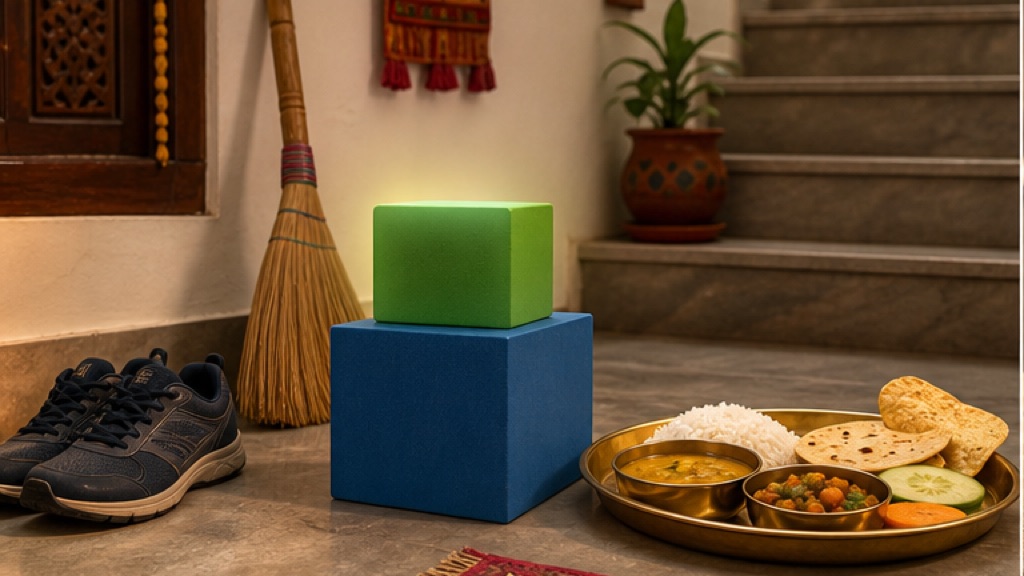
Active calories — the movement slice in Burnie's maths
Active calories are the energy you burn from moving — walking, chores, exercise — on top of your BMR. Burnie adds this slice to your BMR to get the calories-out side of your daily deficit.
Burnie adds two numbers to find your calories-out. One is BMR — the energy your body burns just to stay alive. The other is active calories — the energy you burn by moving. Walking to the bus, cooking, sweeping, taking the stairs, a quick gym session — all of it is active calories. This is the 'moving' slice of Burnie's deficit maths. The bigger it is, the more room you have to eat and still lose weight.
What 'active calories' means in science
Scientists call this active energy expenditure, or AEE. It is the energy your body spends above your resting rate because you moved. One medical textbook puts it plainly: AEE is 'the additional energy expenditure above REE and TEF that is required for performing daily activities.' REE means resting energy, which is close to BMR. TEF is the small burn from digesting food. So active calories do not include BMR — they are only the extra burn from movement. That is why Burnie adds them separately. AEE covers both exercise and daily activity, and it splits into two parts: exercise activity (EAT) and non-exercise activity (NEAT). In mostly sedentary adults, active energy is about 30% of total daily burn, while BMR is about 60%.
BMR vs active calories vs food — what each is
I can grow my active calories enough to skip watching my food.
mostly falseMostly false — the maths is lopsided. Moving more does help, and you should. But eating is fast and burning is slow. A 155-pound person walking briskly for 30 minutes burns about 133 kcal. One gulab jamun is 145 kcal — eaten in two bites. So one sweet nearly cancels a half-hour walk. In Burnie's formula — food_total_kcal minus (bmr + active_calories) — both sides count, but the food side moves faster and is the bigger lever you can use today. Grow your active slice, but do not use it as a reason to skip logging your food.
How Burnie gets your active calories — and how to grow the slice
The bottom line
Active calories are the moving slice — the energy you burn above your BMR from walking, chores, and exercise. Burnie adds this slice to your BMR to get your calories-out, then subtracts your food. Move more to grow the slice and make the deficit kinder. But remember: the food side is the bigger, faster lever. Log before you eat, let Burnie do the maths, and let daily movement help carry the load.