Why your body burns less as you diet (adaptive thermogenesis)
You were losing well, then the scale stuck even though you ate the same. Your body quietly turned down its burn beyond what your smaller size explains. This normal slowdown is called adaptive thermogenesis, and it is not damage.
You did everything right for three weeks. You logged every roti in Burnie. You walked each morning. Then the scale just stopped. Same food, same effort, no reward. Before you blame yourself, meet a quiet trick your body plays. Scientists call it adaptive thermogenesis. Think of it as your body turning down its inner heater. This short read explains what it is, why it is normal, and why it is not your fault.
The whole slowdown happens only because I weigh less now.
it dependsit depends
Part of it is true. A smaller body burns less fuel. That part is simple maths, and you can read about it in our shrinking-deficit article. But scientists found an extra drop on top. When you diet, your burn falls a little more than your new size alone explains. This extra piece has a name. It is adaptive thermogenesis, also called metabolic adaptation. One review put it plainly. Resting burn drops more than the loss of muscle and fat would predict. So yes, your smaller size is most of the slowdown. But a small, real extra dip sits on top. That extra dip is what this article is about.
Meet adaptive thermogenesis: the extra dip
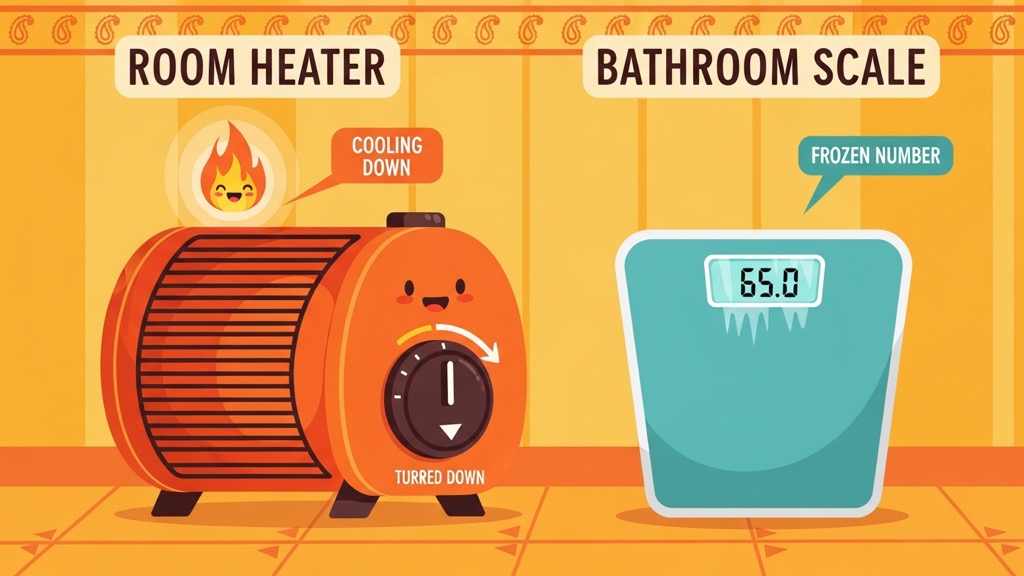
Here is the simple picture. Your body is like a room with a heater. When food was plenty, the heater ran high. When you cut calories, the heater turns down a notch. This extra slowdown does not happen on day one. One big review said it takes more than two weeks of a deficit to even show up. On average the extra dip is about 120 kcal a day. That is roughly the calories in one roti with a little ghee. It is not huge. But it is enough to slow your weekly loss and make the scale feel stuck.
How big is the drop, really?
Adaptive thermogenesis means my metabolism is broken forever.
mostly falsemostly false
Your metabolism is not broken. It is doing what bodies have done for thousands of years. It tries to protect you when food feels scarce. One review calls it a normal physiological mechanism, even a survival signal. The dip is real, but the word 'broken' is wrong. For most people on a steady, modest plan, the dip is small and it eases when eating goes back to normal. The scary numbers you may read online come from people who lost huge amounts very fast. That is not your story. You are not damaged. Your body just turned the heater down a little, and you can nudge it back.
What to do when the heater turns down
The bottom line
Adaptive thermogenesis is your body turning its heater down a notch during a long diet. It is normal, it is small for most people (about 120 kcal a day on average), and it is not damage. It takes more than two weeks to even show up. That is why a steady plan can feel stuck even when you do everything right. So when the scale freezes, do not panic and do not quit. Re-run your maths, hold your protein, walk a little, and give it three weeks. The heater is not broken. It just needs a gentle nudge.