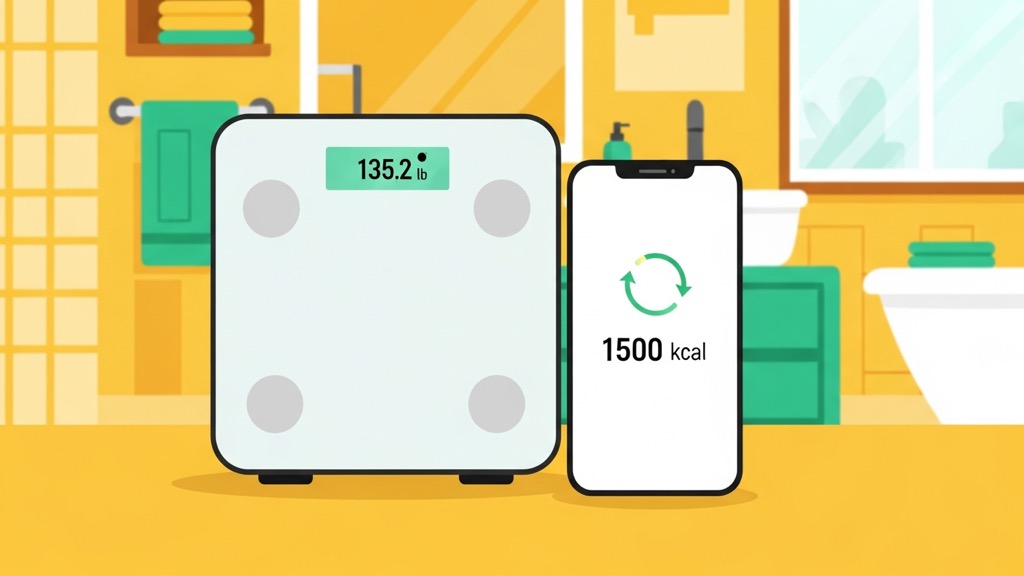
When to recalculate your TDEE after losing weight
As you lose weight, your smaller body burns fewer calories, so your old daily target quietly stops working. Re-check your TDEE every 4 to 5 kilos you lose so the maths stays honest and the scale keeps moving.
You were losing weight nicely. Each week the scale dipped. Then it stopped. You eat the same, walk the same, and log the same, but nothing moves. Here is the quiet reason. Your body is smaller now, so it burns less. The target you set at your old weight has gone stale. Your TDEE means the calories you burn in a whole day. This short read tells you when to re-check that number.
Your daily calorie target stays the same as you lose weight.
mostly falsemostly false
Your daily burn is built from your weight. When your weight drops, the burn drops too. The maths is simple and honest. If you keep using the old number, you slowly eat more than your body now needs. That is why the scale sticks. The target did not break. It just needs a refresh.
Each kilo you lose lowers your burn
The most-used resting-burn rule is the Mifflin-St Jeor equation. It gives your body about 10 calories per kilo of weight, each day, just to stay alive. So when one kilo is gone, you burn about 10 calories less a day at rest. Lose 5 kilos, and that is about 50 calories a day gone, before you even count the calories saved by moving a lighter body. A real study measured this drop. Women who lost about 12.5 kilos burned about 46 calories a day less than the maths predicted, on top of the drop from being lighter. Some of that is the body quietly slowing down to save energy.
Signs it is time to re-check your number
How to refresh your number the easy way
The bottom line
A smaller body burns less. That is maths, not a flaw. Re-check your TDEE every 4 to 5 kilos you lose, or whenever the scale sits flat for two weeks. Type your new weight into Burnie, get a fresh number, and the maths works again.