
Quick answer
A calorie deficit means gently using a little more energy than you eat, sustained over weeks, not a punishing cut. Build it from Indian plate habits: keep cereals to about 45 per cent of the day's energy as ICMR-NIN advises, fill half the plate with vegetables, keep protein at every meal, watch oil and sugar, move for at least 150 minutes a week as WHO recommends, and sleep well. Involve a professional if any health condition applies.
What a deficit is, honestly
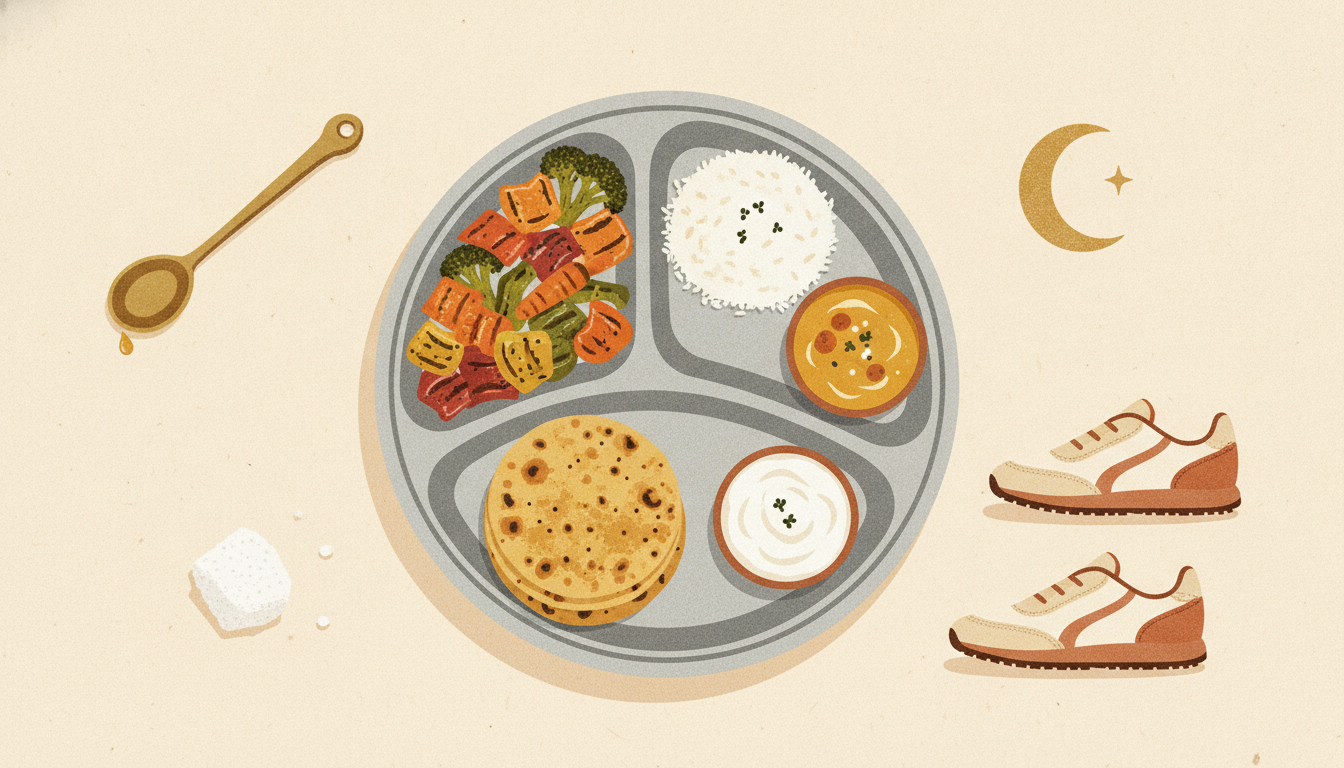
The World Health Organization describes healthy eating as a state where total energy intake is balanced with energy expenditure. A calorie deficit is simply the version of that balance where intake sits a little below expenditure, applied patiently for weeks so the body adjusts rather than panics. Two words carry all the weight: a little, and patiently.
A deficit built on skipping meals, banning rice or surviving on soup collapses in a fortnight, because it fights the food you actually live with. A deficit built on the plate you already eat, with a few adjustments, lasts. The ICMR-National Institute of Nutrition's Dietary Guidelines for Indians, 2024 gives us the plate to start from, so this checklist borrows its structure.
The checklist
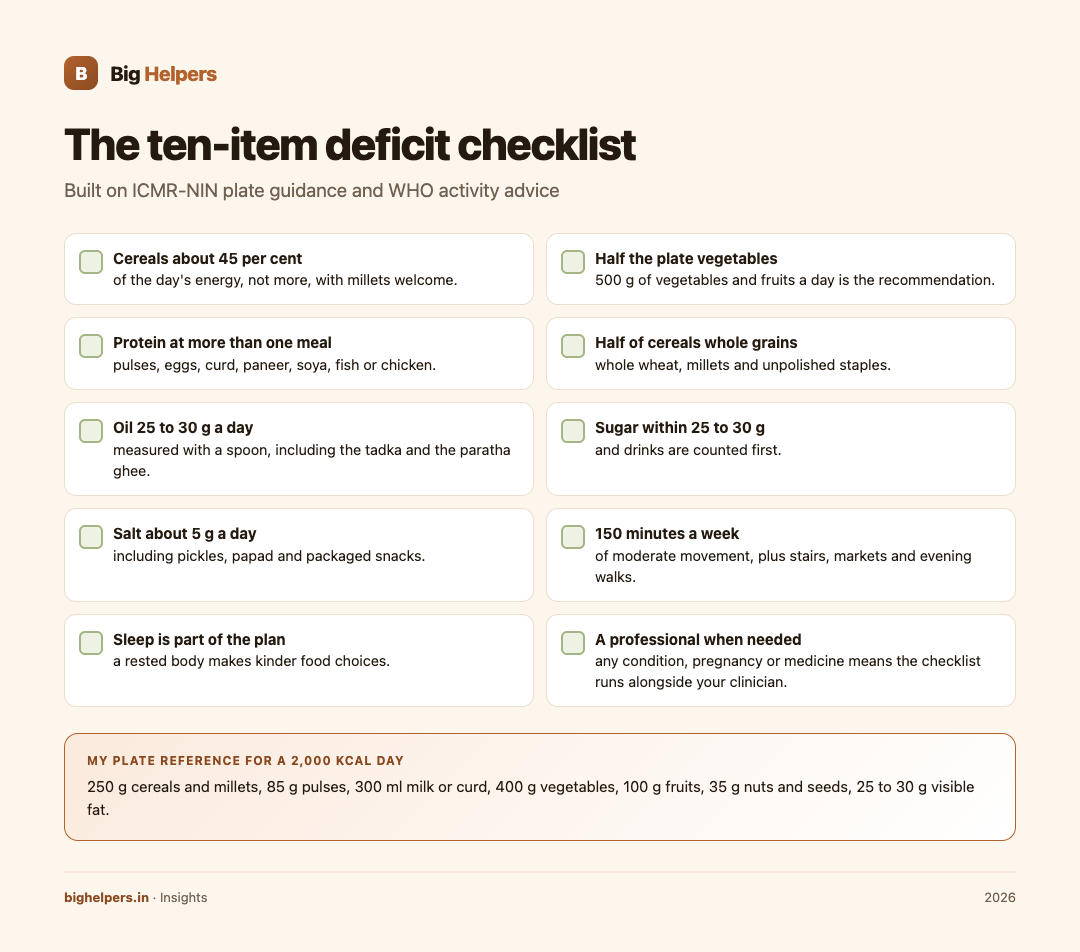
Work through these ten items. Most people find six or seven already true; the remaining ones become this month's project.
- [ ] Cereals hold about 45 per cent of the day's energy, not more. ICMR-NIN recommends not more than 45 per cent of calories from cereals and millets, while most Indians currently take half or more.
- [ ] Half the plate is vegetables and fruits. The guidelines recommend 500 g of vegetables and fruits a day; the average Indian eats 100 to 200 g. This is the single biggest gap on most plates.
- [ ] Protein appears at more than one meal. Pulses, eggs, curd, paneer, soya, fish or chicken; ICMR-NIN's My Plate for a 2,000 kcal day includes 85 g of pulses plus 300 ml of milk or curd.
- [ ] Whole grains appear in the staples. The guidelines suggest at least half of cereals as whole grains, with millets welcome.
- [ ] Visible fat stays moderate. My Plate uses about 25 to 30 g of oil a day for a 2,000 kcal pattern; count the tadka and the paratha ghee.
- [ ] Sugar stays within 25 to 30 g a day, the guideline's upper band, and drinks are counted first.
- [ ] Salt stays at about 5 g a day, including pickles, papad and packaged snacks.
- [ ] Movement reaches at least 150 minutes a week of moderate activity, per WHO, plus the everyday kind: stairs, walking to the market, evening walks after dinner.
- [ ] Sleep is treated as part of the plan, because a rested body makes kinder food choices than an exhausted one.
- [ ] A professional is involved when needed: any diagnosed condition, pregnancy, medicines, or a history of eating concerns means this checklist runs alongside your doctor or dietitian, not instead of them.
My Plate for the Day, as your reference plate
For a 2,000 kcal day, the ICMR-NIN My Plate for the Day suggests, in raw weight: 250 g of cereals and millets, 85 g of pulses, 300 ml of milk or curd, 400 g of vegetables including green leafy vegetables, 100 g of fruits, 35 g of nuts and seeds, and about 25 to 30 g of visible fat. You do not need to hit these numbers daily; use them as the shape of a normal day when you shrink portions for a deficit.
| Food group | My Plate reference (raw, per day) | Deficit adjustment, high level |
|---|---|---|
| Cereals and millets | 250 g | Trim first and most gently |
| Pulses | 85 g | Protect; protein steadies a deficit |
| Milk or curd | 300 ml | Keep, choose lower fat if you prefer |
| Vegetables with greens | 400 g | Never trim; usually raise |
| Fruits | 100 g | Keep; whole fruit over juice |
| Nuts and seeds | 35 g | Keep the small fistful |
| Visible fat | 25 to 30 g | Measure with a spoon, not a heart |
Small adjustments that fit Indian meals
These are examples of the kind of swaps a deficit enjoys, not prescriptions:
- One roti fewer, one katori of sabzi more, dal unchanged.
- Rice served after the vegetables, so the plate fills front to back.
- The pressure cooker's oil measured with a teaspoon rather than poured.
- Snack plates built once a day (roasted chana, sprouts, fruit) instead of open packets at twilight.
- Chai count noticed, sugar per cup counted.
- Weekend restaurant meals logged as estimates the same day, then treated as a meal, not a failure.
The moving parts beyond the plate
A deficit is not only food arithmetic. Movement raises the expenditure side: WHO recommends at least 150 minutes of moderate-intensity activity weekly for adults, and Indian life offers free gymnasiums called stairs, markets and evening walks. Sleep and stress run the appetite side: tired evenings choose fried snacks, calm evenings choose fruit. Track these loosely alongside food, and the weeks stop feeling like a battle against the plate alone.
Common mistakes
- A violent first week. Slashing half your food produces water-weight drama, then rebound. Start with one roti and one spoon of oil.
- Declaring war on rice or roti. Staple foods are not enemies; proportions are the lever.
- Protein forgotten. A deficit without protein at meals leaves you hungry and irritable by day four.
- Liquid calories invisible. Sweet chai, sharbat, packaged juices and cold drinks slip past a food log untouched.
- Weekend amnesia. Two unlogged days can quietly equal the week's careful five.
- Scale-worship. Daily weight moves with water; review the trend, and read our piece on daily weight versus trend if the daily number decides your mood.
- Doing it alone when a condition is involved. Diabetes, thyroid disorders, pregnancy and medicines change the rules. Bring a professional in first.
Where Burnie fits
Burnie by Big Helpers brings food, movement and weight trend into one daily view, built around Indian meals. Its store listing confirms one deficit ring combining estimated resting burn, permitted activity data and logged food, with the maths available when you want it; meal and weigh-in reminders you control; and Academy guides on Indian food, habits and plateaus. It states plainly that it provides estimates and educational information, not medical advice. Burnie is available on iOS. Android is in controlled testing.
One next step
Print the ten-item checklist, tick today's honest state, and pick two items for this month. Burnie is available on iOS, with Android in controlled testing; its current status and store link are listed on the Big Helpers apps page. Teams building health-tracking products can also talk to Big Helpers.
Frequently asked questions
How large should my deficit be?
This article deliberately does not prescribe a number. A sensible deficit is one you can hold for weeks while eating normally at family meals, sleeping well and staying active. A dietitian can set a figure suited to your body and history.
Do I have to give up rice or roti to lose fat?
No. ICMR-NIN's guidance keeps cereals at about 45 per cent of energy rather than removing them; portion and proportion do the work.
What is the easiest first change?
Raise vegetables toward the 500 g guidance and measure the day's cooking oil with a spoon. Together they usually create a gentle deficit without any food bans.
Is walking enough movement?
For general health, WHO's 150 weekly minutes of moderate activity is the benchmark, and brisk walking counts. Anything you add on top, stairs or strength work, is a bonus.
Can I follow this checklist during pregnancy or with diabetes?
Not on your own. Pregnancy, diabetes, thyroid conditions, kidney issues and similar situations need a clinician's or dietitian's plan; this checklist then supports, not replaces, it.
What if the scale refuses to move after three honest weeks?
Review the trend rather than the days, check the unlogged edges, oil, drinks, weekends, and if the pattern holds, take your log to a professional. Logs make those conversations far more useful.
This article is general information and does not prescribe a diet, promise a result, or replace medical advice. Consult a qualified clinician or registered dietitian before starting any calorie deficit, especially with a health condition, pregnancy, medicines or a history of eating disorders.
Sources & references
- ICMR-National Institute of Nutrition, Dietary Guidelines for Indians, 2024, nin.res.in
- World Health Organization, healthy diet fact sheet
- World Health Organization, physical activity fact sheet
- Big Helpers apps page, store availability checked 29 August 2026
- Burnie App Store listing, official Apple iTunes metadata (id6791818637)
Pricing in this guide is verified as of the article date. Verify with vendors before committing budget — rates change quarterly.